

Who Is a Good Candidate for Laser Pigmentation Removal?
If you’re dealing with stubborn dark spots, uneven patches, or sun damage that won’t fade, you’re not alone. I speak with patients every week who feel frustrated after trying creams, serums, and home remedies with little success.
So here’s the clear answer:
A good candidate for laser pigmentation removal is someone with stable, well-defined pigmentation, an appropriate skin type assessment, no major medical contraindications, and realistic expectations about results.
Let’s break this down in a practical, no-fluff way.
Understanding How Laser Pigmentation Removal Works
Before deciding if you’re a good candidate, it helps to understand what lasers actually do. Laser pigmentation treatments rely on a principle called selective photothermolysis, which means the laser targets pigment specifically while minimizing damage to surrounding tissue.
How Laser Targets Excess Melanin
The laser emits a precise wavelength of light that is absorbed by melanin.
The pigment absorbs the energy
It heats up and breaks into smaller particles
Your body gradually clears the fragments over time
This targeted approach allows us to treat dark spots while protecting the surrounding skin.
Why Pigment Depth Matters
Not all pigmentation sits at the same level of the skin.
Epidermal pigment (surface level) usually responds faster
Dermal pigment (deeper level) often requires more sessions
During consultations, I always explain this clearly. Pigment depth determines how many treatments you may need and how quickly you’ll see visible improvement.
Skin Type and Candidacy
Your natural skin tone plays a major role in how we plan laser pigmentation removal. Skin with more melanin carries a higher risk of post-treatment pigment changes, which means settings must be adjusted carefully. Proper classification helps us choose the safest approach.
The Fitzpatrick Skin Type Scale
Most providers use the Fitzpatrick Scale to categorize skin from Type I to VI:
Type | Skin Tone | Typical Reaction to the Sun |
|---|---|---|
I | Very fair | Always burns |
II | Fair | Burns easily |
III | Light-medium | Sometimes burns |
IV | Medium | Rarely burns |
V | Brown | Very rarely burns |
VI | Deep brown | Almost never burns |
This scale helps guide laser selection and energy levels.
Lower-Risk Skin Types (I–III)
Types I–III generally carry a lower risk of post-inflammatory hyperpigmentation after laser. With appropriate settings, these skin types often respond predictably and heal smoothly.
Treating Darker Skin Types (IV–VI) Safely
Darker skin types can absolutely be treated safely, but precision is critical.
Conservative energy settings are required
Specific wavelengths are selected carefully
Patch testing is often recommended
In our clinic, we regularly treat melanin-rich skin. When approached conservatively and customized properly, results can be excellent. Experience and careful parameter selection make the difference.
Types of Pigmentation That Respond Well to Laser
Not every dark spot responds the same way to laser treatment. The cause, depth, and stability of the pigmentation determine whether laser is the right option and how many sessions may be needed.
Sun Spots (Solar Lentigines)
These are often ideal candidates for laser.
Caused by cumulative sun exposure
Have well-defined borders
Usually sit at a superficial level
Because they are typically epidermal, many patients see noticeable lightening after 1–2 sessions.
Freckles
Freckles also respond well to laser. However, they can return with ongoing sun exposure. Long-term sunscreen use is essential to maintain results.
Post-Inflammatory Hyperpigmentation (PIH)
PIH develops after acne, burns, or other skin trauma. Laser can be helpful, but only once inflammation is fully controlled.
I once had a patient eager to treat acne marks immediately. She still had active breakouts. We focused first on calming the acne. Three months later, her laser treatment was safer, and her results were more even. Proper timing made a clear difference.
Melasma: Proceed with Caution
Melasma is hormone-driven and often chronic. It can be unpredictable.
A laser is not always the first-line treatment for unstable melasma. In some cases, it may worsen pigmentation. Stable cases may still qualify, but evaluation must be careful and conservative.
Epidermal vs. Dermal Pigmentation
Surface-level (epidermal) pigment usually responds faster. Deeper (dermal) pigment often requires multiple sessions and realistic expectations. A proper assessment determines which type you have and how to approach it safely.
Medical Factors That Influence Eligibility
Your medical history plays a critical role in determining whether laser pigmentation removal is safe for you. Even mild conditions or medications can affect healing, pigmentation response, and overall risk. A thorough review helps prevent complications.
Photosensitizing Medications
Certain medications increase light sensitivity, including:
Some antibiotics
Retinoids
Hormonal treatments
These can increase the risk of burns, irritation, or rebound pigmentation after laser treatment.
Recent Isotretinoin Use
If you have recently used isotretinoin, many providers recommend waiting before undergoing aggressive laser procedures to allow the skin to stabilize.
History of Keloids or Poor Wound Healing
If you tend to develop raised scars or heal slowly, the laser must be approached conservatively and may not always be advised.
Active Skin Conditions
Laser should be postponed if you have:
Active acne flare
Eczema
Skin infection
Treating inflamed skin increases the risk of complications.
Pregnancy and Hormonal Considerations
Elective laser treatments are typically delayed during pregnancy. Hormonal fluctuations can make pigmentation unpredictable, and safety standards favor caution during this time.
Lifestyle and Commitment Requirements
Laser pigmentation removal is not a one-time event. It requires cooperation between you and your provider. Your daily habits directly influence healing, safety, and how long your results last.
Sun Exposure and Tanning Habits
A strong candidate must:
Avoid recent tanning or significant sun exposure
Commit to daily SPF 30 or higher
Limit UV exposure during the healing period
Freshly tanned skin increases the risk of burns, uneven results, and post-inflammatory hyperpigmentation.
Willingness to Follow Pre- and Post-Treatment Care
To protect your skin, you may need to:
Pause retinoids temporarily
Avoid exfoliating acids
Switch to gentle, barrier-supporting skincare
Following instructions carefully improves both safety and outcomes.
Ability to Avoid Skin Irritants During Treatment
Skin that is inflamed or over-exfoliated heals poorly. Keeping your skin calm and supported during treatment leads to smoother recovery and better long-term results.
Realistic Expectations and Treatment Goals
Your expectations play a major role in how satisfied you’ll feel with your results. Even the most advanced laser cannot override biology. Understanding what lasers can and cannot do helps prevent disappointment and ensures you approach treatment with clarity.
Improvement vs. Complete Removal
Laser significantly improves pigmentation, but it does not erase your entire skin history.
Most patients experience visible lightening and blending of dark spots. Expect improvement — not flawless, filter-like skin.
Need for Multiple Sessions
Results depend on pigment type and depth:
Some patients respond in 1 session
Others require 3–5 sessions spaced several weeks apart
We always set this expectation clearly before starting treatment.
Risk of Recurrence and Maintenance
Pigmentation can return with sun exposure or hormonal changes. Daily SPF and long-term skin care are essential to maintain results.
Who May Not Be an Ideal Candidate
Laser pigmentation removal is not right for everyone at every stage. In some cases, treating too soon or under the wrong conditions can increase the risk of rebound pigmentation or uneven results. Careful timing and proper skin preparation are essential.
You may need alternative or delayed treatment if you:
Have unstable or hormonally active melasma
Are recently tanned or have significant sun exposure
Cannot commit to strict daily sun protection
Need immediate results for an upcoming event
Planning and timing truly matter for safe, predictable outcomes.
What Happens During a Professional Consultation
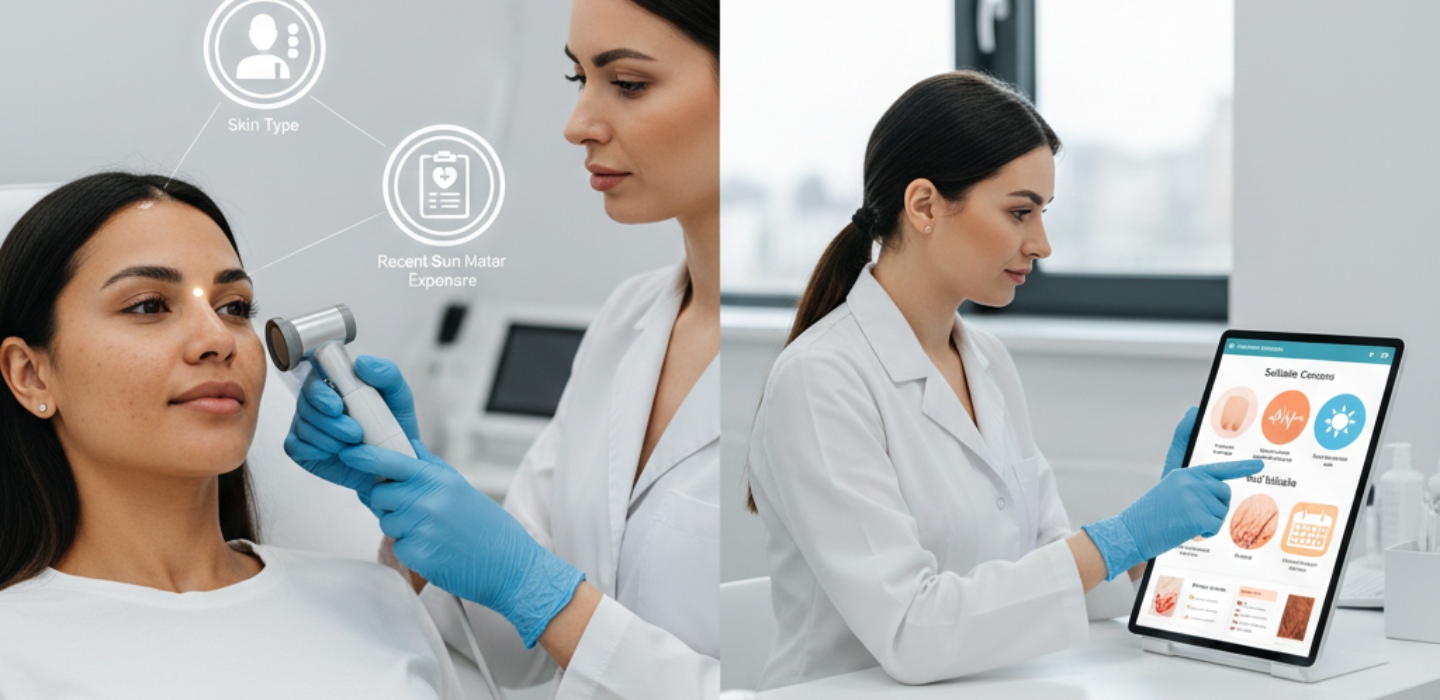
A proper consultation is the most important step in determining whether laser pigmentation removal is safe and appropriate for you. We don’t rely on quick visual checks. We perform a structured evaluation before approving any treatment.
Skin and Pigment Assessment
We assess your skin type, pigment depth, location, and pattern. This helps us determine whether the pigmentation is epidermal or dermal and which laser settings are safest and most effective.
Medical History Review
We review your medications, past procedures, healing history, and any tendency toward hyperpigmentation or scarring. This reduces unnecessary risks.
Personalized Treatment Planning
We design a treatment plan based on your skin, goals, and lifestyle. Settings, session spacing, and aftercare are customized.
No rushed decisions. No generic settings.
Final Checklist – Are You a Good Candidate?
Before moving forward, it helps to quickly assess whether laser pigmentation removal is truly right for you. Strong candidates usually meet the following criteria:
You are likely a good candidate if:
Your pigmentation is stable, well-defined, and not actively worsening
Your skin type has been properly assessed by a professional
You are not recently tanned and have avoided significant sun exposure
You have no major medical contraindications or active skin infections
You understand that improvement may require multiple sessions
You are committed to daily sun protection and proper aftercare
Conclusion
Laser pigmentation removal works best when the right candidate is treated at the right time. Success depends on skin type, pigment depth, medical history, and your commitment to sun protection and aftercare.
If you see yourself in the checklist above, the next step is a proper consultation. At Hailey’s Hair Removal and Aesthetics, we assess your skin carefully, customize your treatment plan, and prioritize safety so you get clear, even results — the right way.
Related Articles