

Is Electrolysis Permanent? What You Need to Know
Tired of shaving every few days or booking constant waxing appointments? Are you probably asking the real question: Is electrolysis truly permanent?
Here’s the clear answer: Yes. Electrolysis is the only FDA-recognized method for permanent hair removal.
However, lasting results depend on proper technique, completing your full treatment plan, and hormonal factors.
In this article, you’ll learn how electrolysis works, why multiple sessions are needed, what to expect, and what affects long-term results — so you can decide confidently if it’s right for you.
What Does “Permanent Hair Removal” Really Mean?
The word permanent gets used loosely in the beauty industry. Let’s define it properly.
The FDA Definition of Permanent Hair Removal
The U.S. Food and Drug Administration (FDA) recognizes electrolysis as permanent hair removal. That means:
The treated hair follicle is permanently destroyed and cannot produce hair again.
This is different from laser hair removal, which is classified as permanent hair reduction.
That difference matters.
Permanent Removal vs. Permanent Reduction
Here’s a simple comparison:
Electrolysis | Laser Hair Removal |
|---|---|
Permanently destroys each treated follicle | Reduces hair growth |
Works on all hair colors | Less effective on blonde, gray, or red hair |
Safe for all skin tones | Dependent on pigment contrast |
No maintenance once cleared | Often requires touch-ups |
Laser reduces density.
Electrolysis eliminates follicles.
Why Some Hair May Appear Later
If someone sees hair later, it’s usually because:
- Dormant follicles became active
- Hormonal shifts triggered new growth
- The treatment plan wasn’t completed
That is not regrowth of a destroyed follicle.
It’s new hair from previously untreated follicles.
I always explain this upfront. Once a follicle is properly treated, it does not regenerate.
How Electrolysis Works
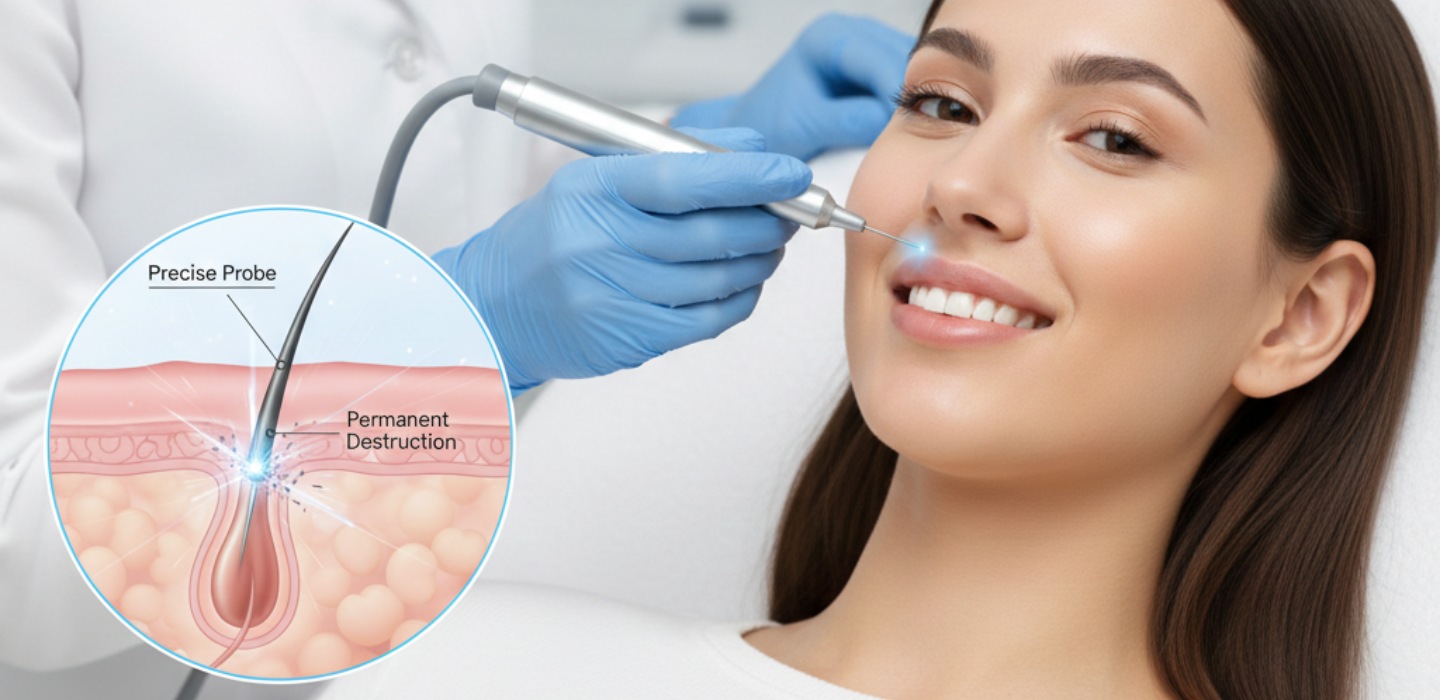
Electrolysis removes hair with precision by treating one follicle at a time. It does not rely on pigment or light. Instead, it directly destroys the hair’s growth center.
How the Hair Follicle Is Destroyed
During treatment:
- A sterile probe is gently inserted into the natural follicle opening
- A controlled electrical current is applied
- The growth cells at the base are destroyed
- The hair slides out smoothly without pulling
When performed correctly, the surrounding skin is not harmed.
Having both received and performed electrolysis myself, I can say technique truly matters. When done properly, the sensation feels like brief warmth or a quick zap — not trauma.
The Three Types of Electrolysis
All methods permanently destroy treated follicles. The difference lies in how energy is delivered:
- Galvanic – Uses a chemical reaction to destroy the follicle
- Thermolysis – Uses heat to disable growth cells
- Blend – Combines chemical action and heat
The method chosen depends on hair thickness, skin type, and treatment area.
Why Multiple Sessions Are Necessary
If electrolysis is permanent, why doesn’t it happen in one visit?
The answer is simple: hair grows in cycles, and we can only treat hair effectively during certain phases.
The Hair Growth Cycle Explained
Hair grows in three stages:
- Anagen (active growth phase)
- Catagen (transition phase)
- Telogen (resting phase)
Electrolysis works best during the anagen phase, when the hair is fully connected to the follicle’s growth center.
However, not all hairs are in anagen at the same time. That’s why we treat what’s active, then wait for the next group to surface.
Strategic spacing ensures every follicle gets treated properly.
Why Timing and Consistency Matter
A typical treatment plan includes:
- Weekly or biweekly sessions at the beginning
- Gradual spacing as hair density decreases
- Several months to achieve full clearance
Facial areas often require 9 to 18 months, depending on hair density and hormonal influences. Body areas may take longer due to thicker follicles and slower cycles.
Consistency keeps you progressing toward permanent results.
What to Expect During Treatment
If you’re new to electrolysis, knowing what happens can ease anxiety. The process is precise, controlled, and tailored to your comfort.
What Happens During a Session
A typical session follows a simple flow:
- The area is gently cleansed
- Each visible hair is treated individually
- Treated hairs slide out without pulling
- Sessions may last 15 minutes to over an hour, depending on the area
Tolerance varies. Some clients relax easily. Others prefer shorter appointments. We adjust pacing to suit you.
Sensation and Comfort Levels
Most people describe the feeling as:
- Mild heat
- Tiny pinpricks
- Brief, quick discomfort
To improve comfort, we can use:
- Topical numbing options
- Cooling techniques
- Adjusted intensity settings
You’re always in control. If something feels too strong, we modify immediately.
Immediate Skin Reactions
It’s normal to experience:
- Temporary redness
- Slight swelling
- Mild warmth
These reactions usually fade within a few hours. They are signs that the follicle was successfully treated.
What to Expect After Treatment
Healing is usually simple and predictable when you follow proper aftercare. Most reactions are mild and temporary.
Normal Healing Process
Within 24 to 48 hours, you may notice:
- Mild redness
- Slight swelling
- Tiny scabs in some areas
- Mild tenderness
These are normal signs that the follicle was treated effectively. Avoid picking or scratching. Let the skin heal naturally to prevent irritation or marks.
Aftercare Guidelines
Proper aftercare supports healing and protects results.
We recommend:
- Avoid touching the treated area
- Limit sun exposure
- Avoid heavy makeup for 24 hours
- Keep the skin clean and lightly moisturized
Simple care makes a big difference in recovery and skin appearance.
When to Contact a Professional
Reach out to your provider if you notice:
- Persistent swelling beyond a few days
- Signs of infection, such as pus or spreading redness
- Unusual or excessive scabbing
These reactions are uncommon when treatment is performed correctly, but early guidance ensures everything heals properly.
Factors That Affect Long-Term Results
Electrolysis permanently destroys treated follicles. However, long-term success depends on biology, consistency, and professional skill.
Hormonal Influences
Hormones can stimulate new hair growth, even after successful clearance.
Common triggers include:
- PCOS
- Menopause
- Thyroid imbalance
- Pregnancy
For example, I treated a client who achieved full chin clearance. Two years later, she developed new hair during menopause. It was not regrowth. It was new hormonal stimulation. We treated it successfully.
Hormones can create new follicles. They do not revive destroyed ones.
Treatment Consistency
Consistency determines speed and efficiency.
Important guidelines:
- Do not tweeze between sessions
- Do not wax
- Shaving is allowed
Tweezing removes the hair shaft and disrupts the growth cycle, making treatment less effective. Skipping sessions also prolongs your timeline.
Stick to your schedule for the best results.
Skill and Technique of the Practitioner
Permanent destruction depends on precision.
It requires:
- Proper probe placement
- Correct energy level
- Accurate timing
- Strict sterile technique
Experience matters. A qualified electrologist ensures effective follicle destruction while protecting your skin. Choosing the right provider directly impacts your outcome.
Electrolysis vs. Laser Hair Removal
Many people ask which option is better. The honest answer depends on your goal. If you want a reduction, a laser may help. If you want permanent removal, electrolysis is the definitive solution.
Understanding the difference helps you choose wisely.
Key Differences in Permanence
Laser hair removal works by targeting pigment (melanin) in the hair. That’s why it performs best on dark hair against lighter skin.
Laser:
- Reduces hair growth
- Works best on dark, coarse hair
- Less effective on blonde, gray, or red hair
- Often requires long-term maintenance sessions
Electrolysis does not rely on pigment. It destroys the follicle directly.
Electrolysis:
- Permanently destroys treated follicles
- Works on all hair colors
- Safe for all skin tones
- No maintenance once an area is fully cleared
A laser can reduce bulk quickly on larger areas like legs or the back.
Electrolysis finishes the job permanently, especially for stubborn or light hairs.
When Electrolysis Is the Better Choice
Electrolysis is often the better option if you have:
- Facial hair (chin, upper lip, jawline)
- Hormonal hair growth
- Blonde, gray, red, or white hair
- Small precision areas like eyebrows
- Hair that remained after laser treatments
If your goal is complete and permanent removal, not just thinning, electrolysis offers the most reliable, long-term result.
Who Is a Good Candidate for Electrolysis?
One of the biggest advantages of electrolysis is its versatility. Unlike other hair removal methods, it works safely and effectively across a wide range of people.
Electrolysis is suitable for:
- All skin tones — from very fair to deep skin
- All hair colors — including blonde, gray, red, and white
- Men and women
- Sensitive or reactive skin
It’s especially helpful if:
- Laser treatments did not fully work for you
- You have hormonal facial hair
- You want precise removal in small areas like the chin, brows, or upper lip
If you’re tired of constant shaving, waxing, or tweezing — and want a permanent solution — you’re likely an excellent candidate.
Common Myths About Electrolysis Permanence
Misinformation keeps many people from choosing electrolysis. Let’s clear up the most common myths with facts.
“Hair Always Grows Back”
False. When a follicle is properly treated, it is permanently destroyed and cannot regenerate.
What people often mistake for regrowth is:
- Dormant follicles becoming active later
- New hormonal growth
- Incomplete treatment cycles
Electrolysis permanently removes treated hair. However, untreated follicles can still produce hair, which is why completing your plan matters.
“Electrolysis Causes Scarring”
When performed correctly, scarring is extremely rare.
Electrolysis uses a fine probe inserted into the natural follicle opening. It does not puncture new skin. Damage typically occurs only when:
- Settings are too aggressive
- The practitioner lacks proper training
- Aftercare instructions are ignored
Temporary redness and small scabs are normal. Permanent scarring is not.
Choosing an experienced electrologist significantly reduces risk.
“It’s Too Painful to Complete”
Most people expect it to hurt more than it does.
Common sensations include:
- Mild heat
- Tiny pinpricks
- Brief stinging
Discomfort lasts seconds per hair. As density decreases, sessions become easier and shorter.
We also adjust intensity, offer numbing options, and work at your comfort level. Many clients tell us that the anxiety beforehand was worse than the treatment itself.
The result? Temporary discomfort for permanent freedom.
Is Electrolysis Truly Permanent? The Final Verdict
Yes. Electrolysis permanently destroys treated hair follicles. But lasting results depend on completing your plan, staying consistent, managing hormonal factors, and choosing an experienced professional.
Clients who commit to the process gain real freedom. No more waxing schedules. No daily shaving stress.
At Hailey’s Hair Removal & Aesthetics, we guide you step by step with personalized treatment plans and honest expectations so you don’t just remove hair, you gain lasting peace of mind.
Related Articles